The capital of Spanish Texas, and it is in Louisiana
Los Adaes, in the forests of what is now northwestern Louisiana near Robeline, was the capital of Spanish Texas for half a century, an outpost of New Spain set down within reach of a French town. It sits in the homeland of the Caddo, an agricultural people whose trade reached from New Mexico to the Great Lakes, and it took its name from the Adai, a Caddoan people the Franciscans hoped to convert.
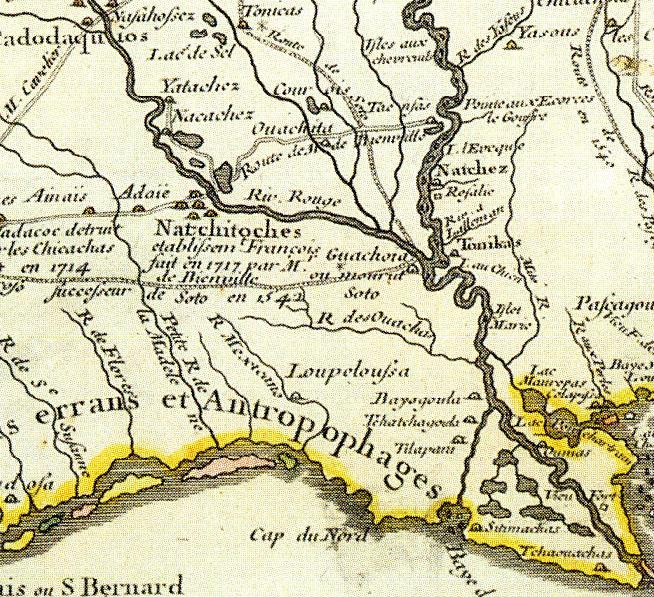
The French came first. The Louisiana governor sent Louis Antoine Juchereau de St. Denis west, and by 1713 or 1714 he had founded Natchitoches on the Red River. Spain answered with six missions between the Neches and the Red in 1716 and 1717, among them San Miguel de los Adaes, a few miles from the French. In 1719, during the War of the Quadruple Alliance, a handful of Frenchmen from Natchitoches took the mission from its lone soldier, who did not know the nations were at war; in the Park Service's telling, frightened chickens knocked the French commander off his horse and the mission's priest escaped. The Spanish fled to San Antonio. In 1721 the Marqués de San Miguel de Aguayo marched back with 500 soldiers and built the presidio of Nuestra Señora del Pilar de los Adaes, with six cannon and a garrison of 100. Accounts differ on when it became the capital of Texas: 1721, or 1729 by the Park Service's account.
It survived on its neighbours. San Antonio was some 400 miles away and Spanish law sent every Texas-bound good through Veracruz and Mexico City, so the settlers traded, illegally, with the French at Natchitoches; archaeologists have found French wine bottles and cookware, and Caddo pottery makes up 90 percent of the sherds recovered. Spanish priests said mass at the French fort, and families intermarried: St. Denis married Manuela Sánchez, granddaughter of the Spanish commander Diego Ramón. The missionaries converted almost no one, and the mission closed in 1768.
When France ceded western Louisiana to Spain in 1762, Los Adaes lost its purpose. The Marqués de Rubí found two friars, 25 families and 61 soldiers. San Antonio became the capital in 1772, and in 1773 the 500 settlers were given five days to leave; many died on the three-month march, and some later founded Nacogdoches. The site became a National Historic Landmark in 1986 and is now a state historic site on El Camino Real de los Tejas, with a museum and the traces of the presidio and chapel.
Other places on the map within a couple of hours.
