Sealed under 4 km of ice for maybe 20 million years
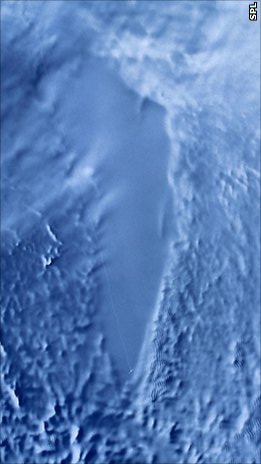
Vostok Station sits at the southern Pole of Cold, high on the East Antarctic Ice Sheet, where on 21 July 1983 the thermometer fell to −89°C, the coldest natural temperature ever recorded on Earth. On the surface there is nothing to see but thousands of square miles of wind-rippled snow. Some four kilometres beneath it lies Lake Vostok, the largest of Antarctica's hundreds of known subglacial lakes: about 250 km long and 50 km wide, covering 12,500 square kilometres, as long as Lake Ontario and as deep as Lake Tahoe, its surface about 500 metres below sea level.
The idea of water under the ice goes back to Peter Kropotkin at the end of the 19th century, who reasoned that the weight of the ice could lower the melting point at its base. Andrey Kapitsa's seismic soundings from Soviet expeditions in 1959 and 1964 hinted at it, British airborne radar in the early 1970s picked up strange readings, and the satellite ERS-1 confirmed the lake in data published in 1993. In 1996 Russian and British scientists announced it in Nature, one of the largest geographic features discovered in a century.
It is a strange world down there. The water stays liquid at around −3°C because of the pressure of the ice above, perhaps warmed from below by geothermal heat, and it is thought to be supersaturated with oxygen and nitrogen, some 50 times more than ordinary lakes. It has tides of about 12 millimetres. The ice sheet creeps across it so slowly that crossing from shore to shore takes some 15,000 years, and 70 metres of sediment on the bed may hold a record of Antarctica before the ice. The lake may have been sealed off for 15 million years or more, which has made scientists think of the ice-covered oceans of Europa and Enceladus.
Reaching it was controversial. A 1998 core was stopped about 100 metres above the water to keep 60 tons of Freon and kerosene in the borehole out of the lake; even so, microbes in ice formed from frozen lake water suggested it might support life. On 5 February 2012 Russian drillers finished a core 3,768 metres long and broke through, and lake water surged up the borehole and mixed with the drilling fluid, the very risk that had led critics to urge hot-water drilling instead. The first core of freshly frozen lake ice came up in January 2013. Whether anything truly native lives in Lake Vostok is still an open question.
East Antarctica
See it on the map
Commons photos · Atlas Obscura · Britannica · GeoNames · OpenStreetMap
This is remote ground. The closest other places on the map are a long way off.
