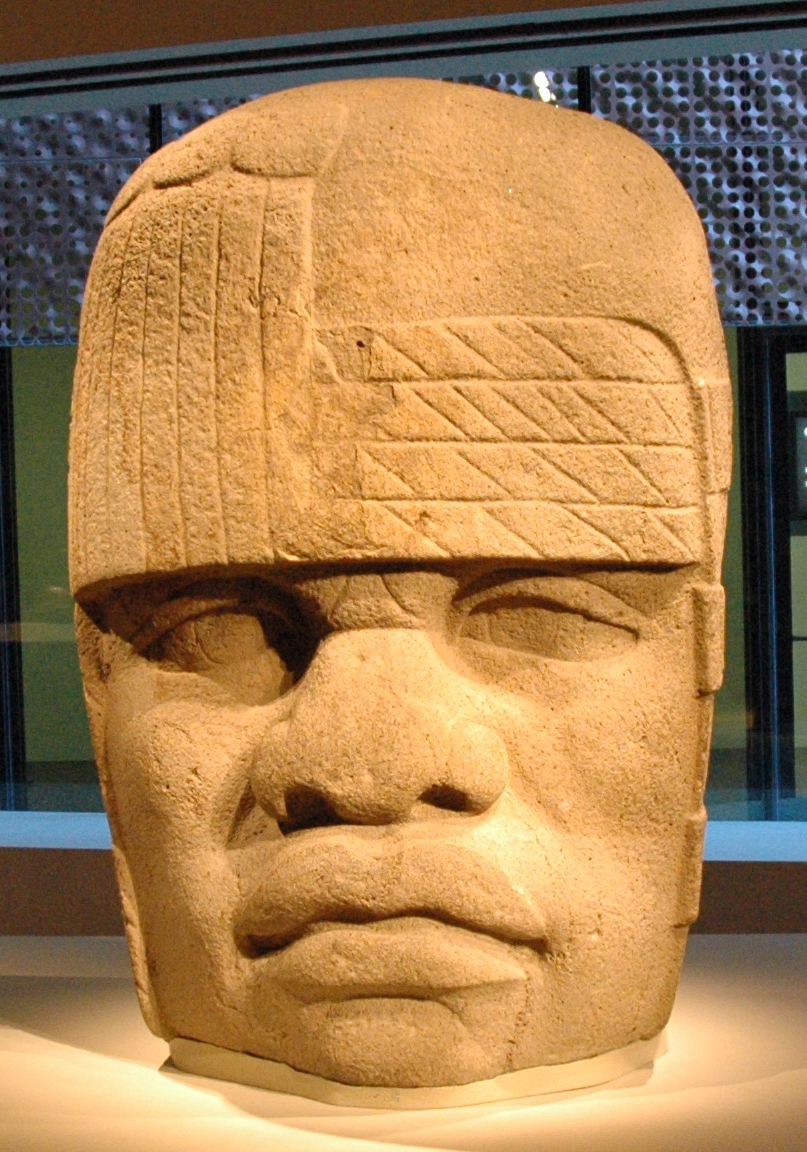
Seventeen giant stone faces, moved by a method nobody can explain
Seventeen colossal stone heads are known, from four sites in the Olmec heartland on the Gulf Coast of Mexico, home of the first civilisation of Mesoamerica. They stand from 1.17 to 3.4 metres tall. The smallest weigh 5 tonnes; the largest ever begun, estimated at 36 to 45 tonnes, was abandoned unfinished near its quarry. Each wears its own close-fitting headdress, perhaps a helmet for war or for the ballgame, and each face is individual, which is why they are taken for portraits of Olmec rulers; all show features still common among the people of Tabasco and Veracruz. Most date from 1500 to 1000 BC. The basalt came from the Tuxtla Mountains, more than 150 kilometres away, and how the Olmec moved boulders that size is still unclear. The first head was found at Tres Zapotes in 1862, and Matthew Stirling’s excavation of it in 1938 opened up the study of the whole culture; two of the heads from San Lorenzo were recarved from giant stone thrones. The Xalapa Museum of Anthropology holds several, among them San Lorenzo Heads 3 and 4.
Xalapa Museum of Anthropology, Veracruz, Mexico
See it on the map
Other places on the map within a couple of hours of here.
